2023–2026
Project Eno
The clamshell engine, and the cold flow campaign that ended it.
Take a clamshell-architecture engine from design through to a hot fire.
Outcome
Cold flow testing exposed too many problems with the clamshell design — among other issues — to carry it forward. The team redrafted rather than patched it, and Eno's test data became the foundation Prometheus is designed from.
Workstreams
- 01Engine Control & Measurement ElectronicsA chamber-pressure tap routed through the injector centerline, plus the sensors and wiring that read it during cold flow.
- 02Tanks & Feed SystemNitrogen-pressurized kerosene and N2O tanks, run pressure-fed rather than pump-fed to keep the system simple.
- 03Engine DesignThe regeneratively cooled clamshell chamber and cone injector, atomizing kerosene and N2O by collision at the injector face.
The concept
Eno was Duke AERO Liquid Propulsion’s first full engine program: a clamshell-architecture liquid engine, built to take the division from paper design through an assembled article and toward a hot fire. The clamshell split the engine into two bolted halves rather than a single machined pressure vessel — a structural bet meant to make the chamber easier to machine, inspect, and rebuild between tests than a one-piece design would have been.
TODO(content): name the specific propellants, target thrust/chamber pressure, and program start date once confirmed — nothing here should guess a number.
Building it
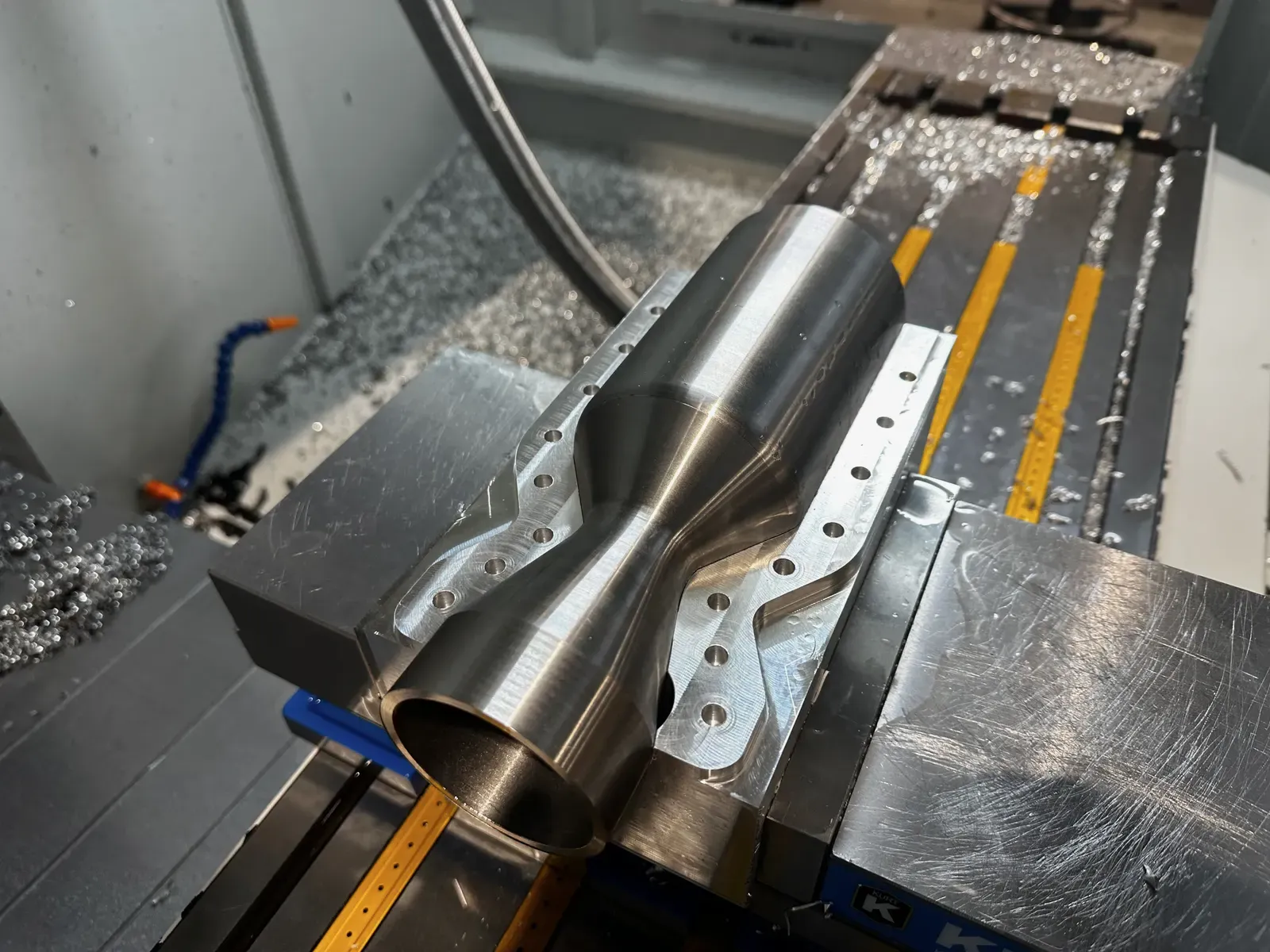
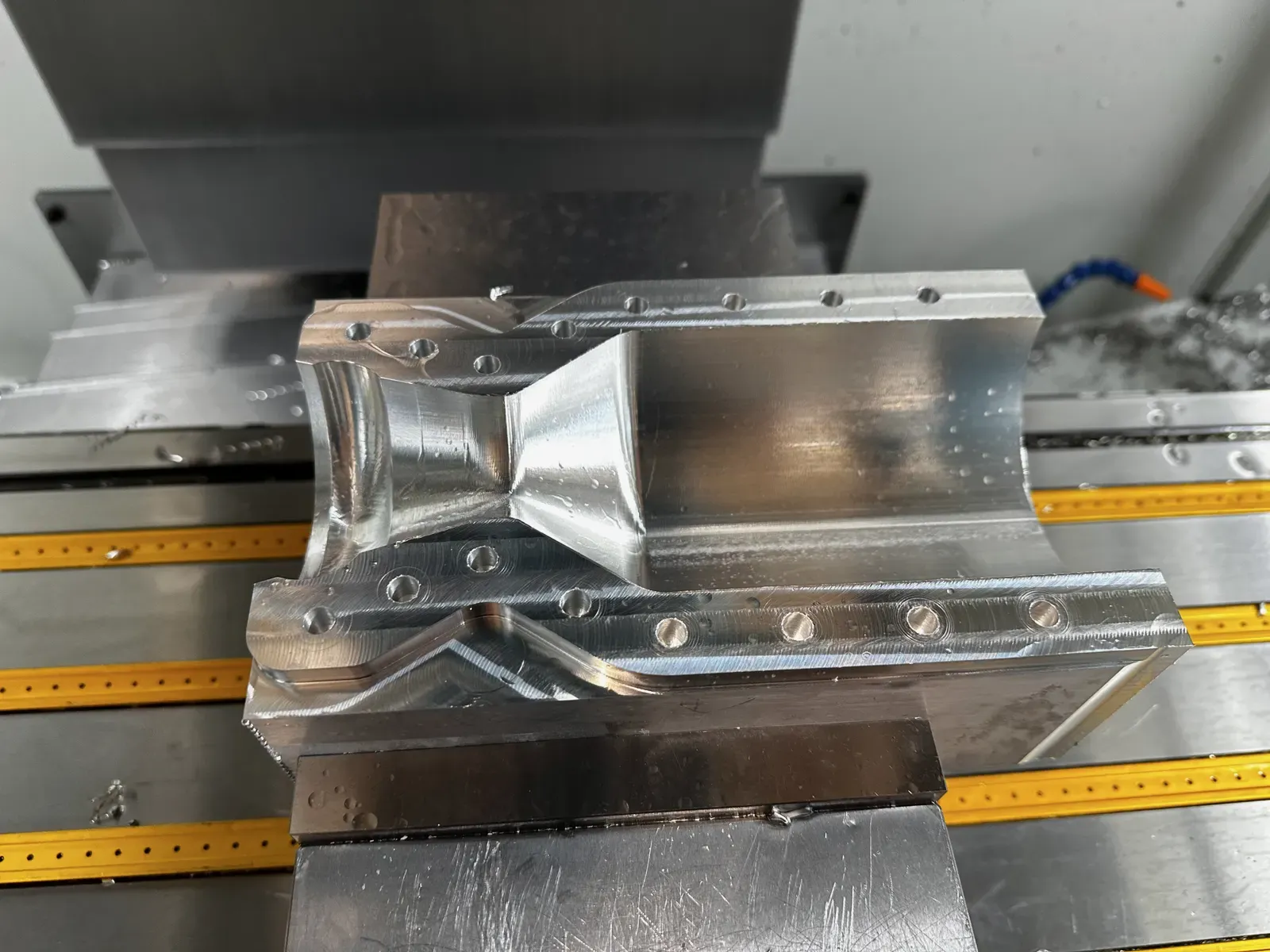
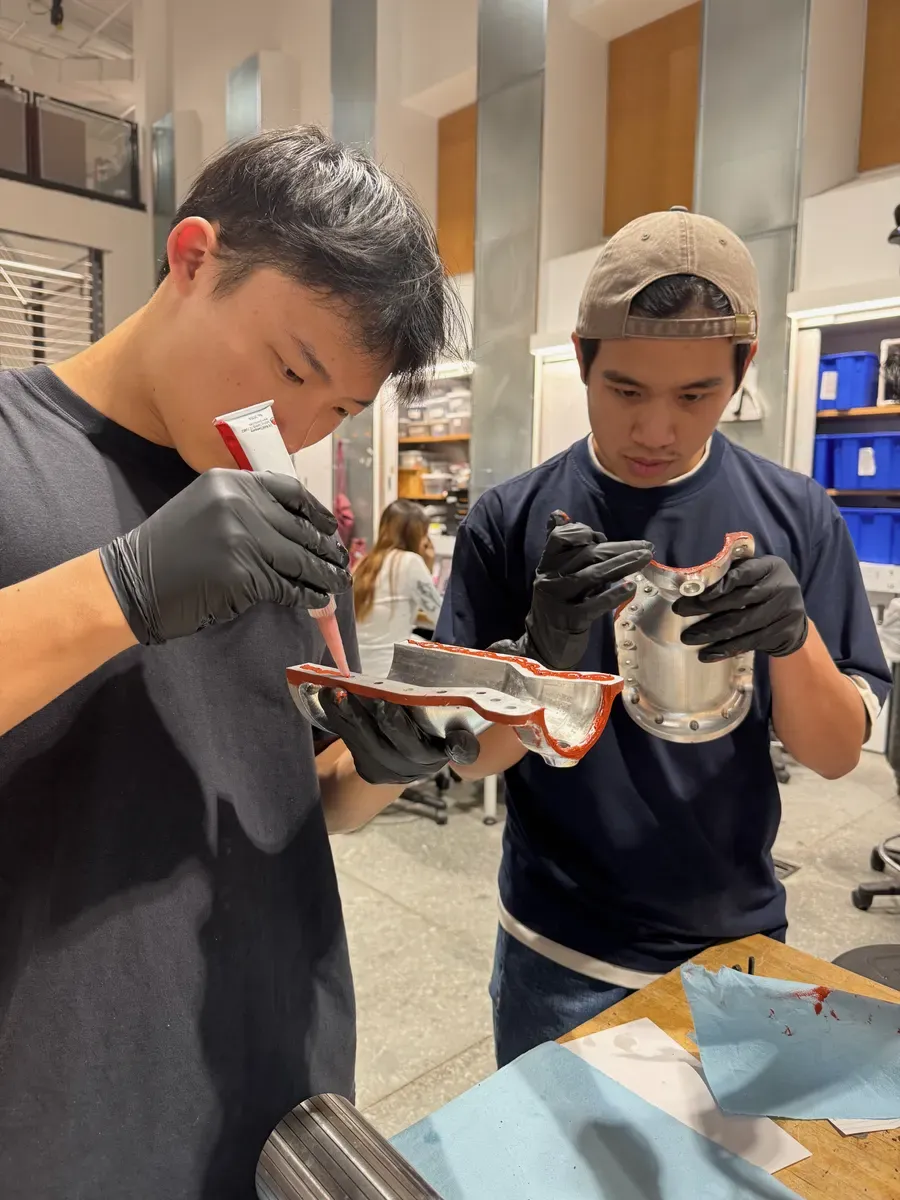
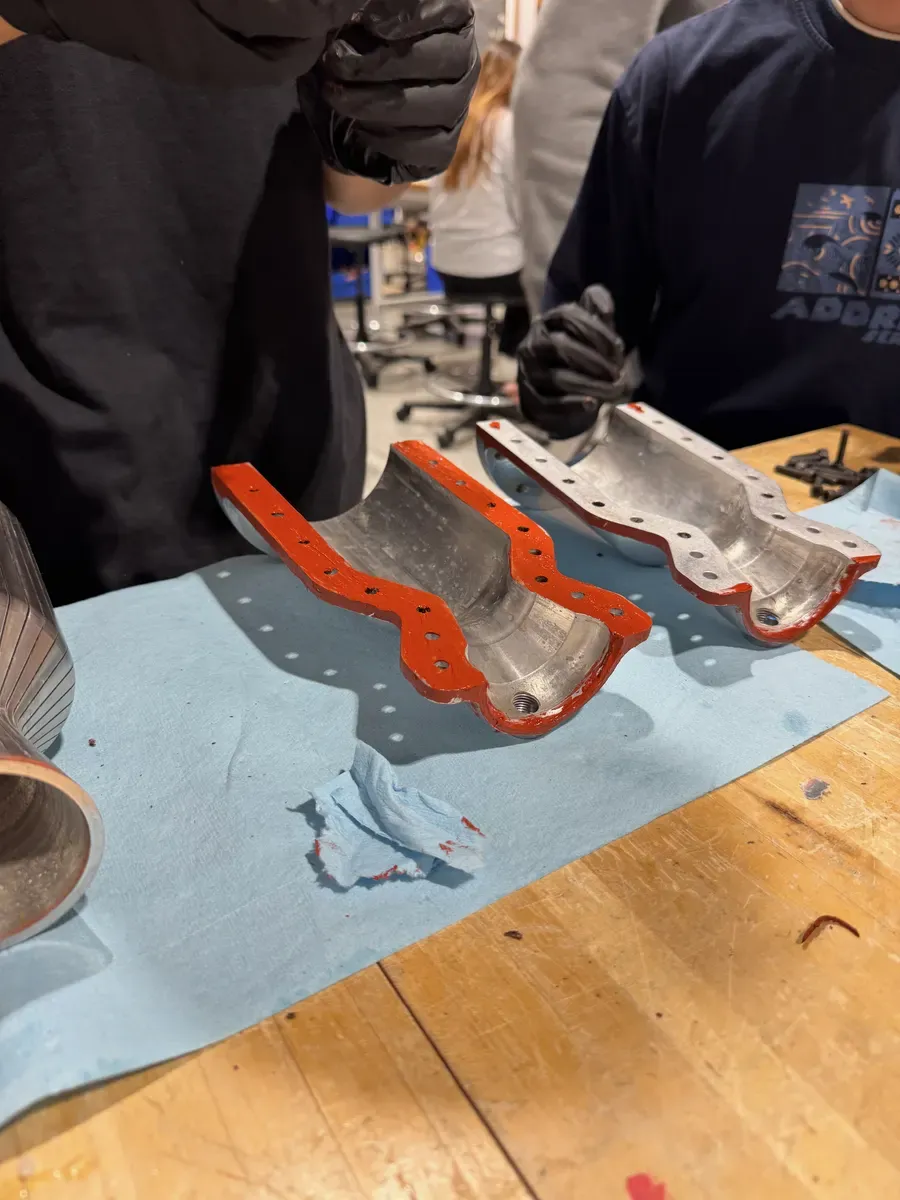
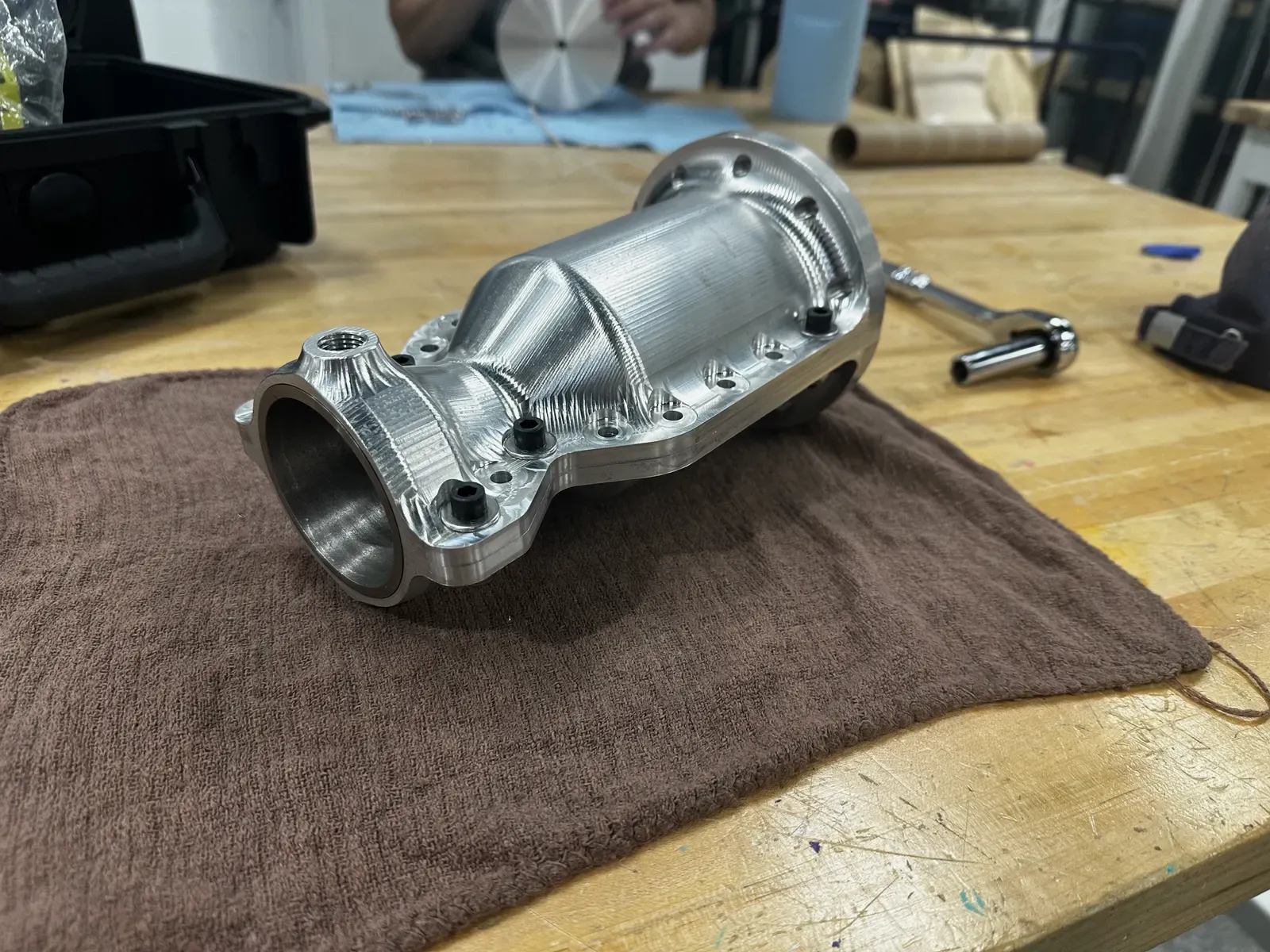
The two clamshell halves were machined, inspected, and assembled into a complete engine before the campaign moved to testing. The photos below are from that build: cutting the internal contour, opening the halves for inspection, and the finished article assembled ahead of cold flow.
The cold flow campaign
Cold flow testing — running the propellant feed system through the engine without ignition — is where a design meets real flow rates and pressures for the first time, ahead of the far more expensive step of putting fire through it. Eno’s cold flow campaign surfaced enough problems with the clamshell architecture that the team chose to redraft rather than patch it forward.
TODO(content): the specific failure modes cold flow exposed (sealing at the clamshell split line, flow characteristics, whatever the actual findings were) — this is the load-bearing paragraph for the whole page and needs real detail from whoever ran the campaign.
What Eno handed forward
A project that doesn’t reach hot fire is still not wasted work: Eno’s cold-flow data became the starting point Project Prometheus was designed from, and the clamshell’s structural lessons are a direct reason Prometheus is a clean-sheet regeneratively cooled design rather than a second attempt at the same architecture.
From the build